Chevron's contract scheduling process had existed for 20 years and had grown differently across regions in that time. The goal was to design a scheduling experience that worked for both East and West Coast schedulers while being foundationally sound enough to scale to other product types across North America.
Through workshops, observation sessions, and three days of process mapping with schedulers in San Ramon, we found the mental model that anchored the whole project: contract scheduling is essentially a card matching game. That insight shaped the research, the design, and eventually brought schedulers around to a more visual way of working that better reflected how they already thought about their work. The foundation is in production, built to be the starting point for scheduling across Chevron's broader platform.
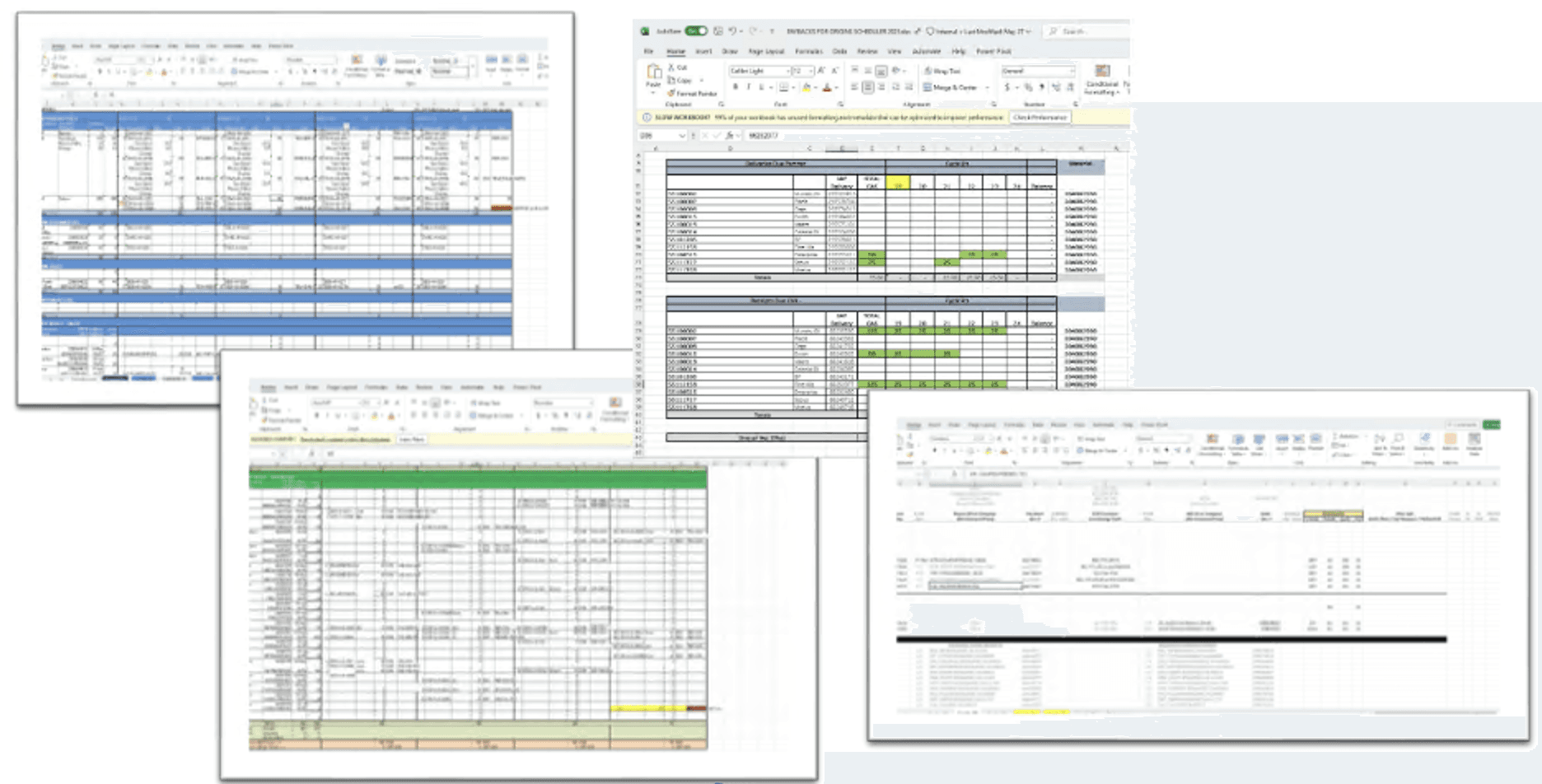
Schedulers sit at the center of a fast-moving supply chain, managing the flow of refined fuels between their organization and the counterparties they work with. They're balancing tight deadlines, shifting supply and demand, and keeping track of every barrel across traders, planners, and finance. It's a process that had existed at Chevron for 20 years and relied on two beloved Excel files — the "origin scheduling sheet" and "hill sheet."
We had already built out contract balancing, giving schedulers visibility into what contracts they had and how much had been committed. This effort was about the next layer: contract scheduling, the part where they actually move product, create nominations, and execute deals. The goal was to design it in a way that worked for both East and West Coast schedulers' common ground scheduling needs while leaving room for regional flexibility.
Learning the process
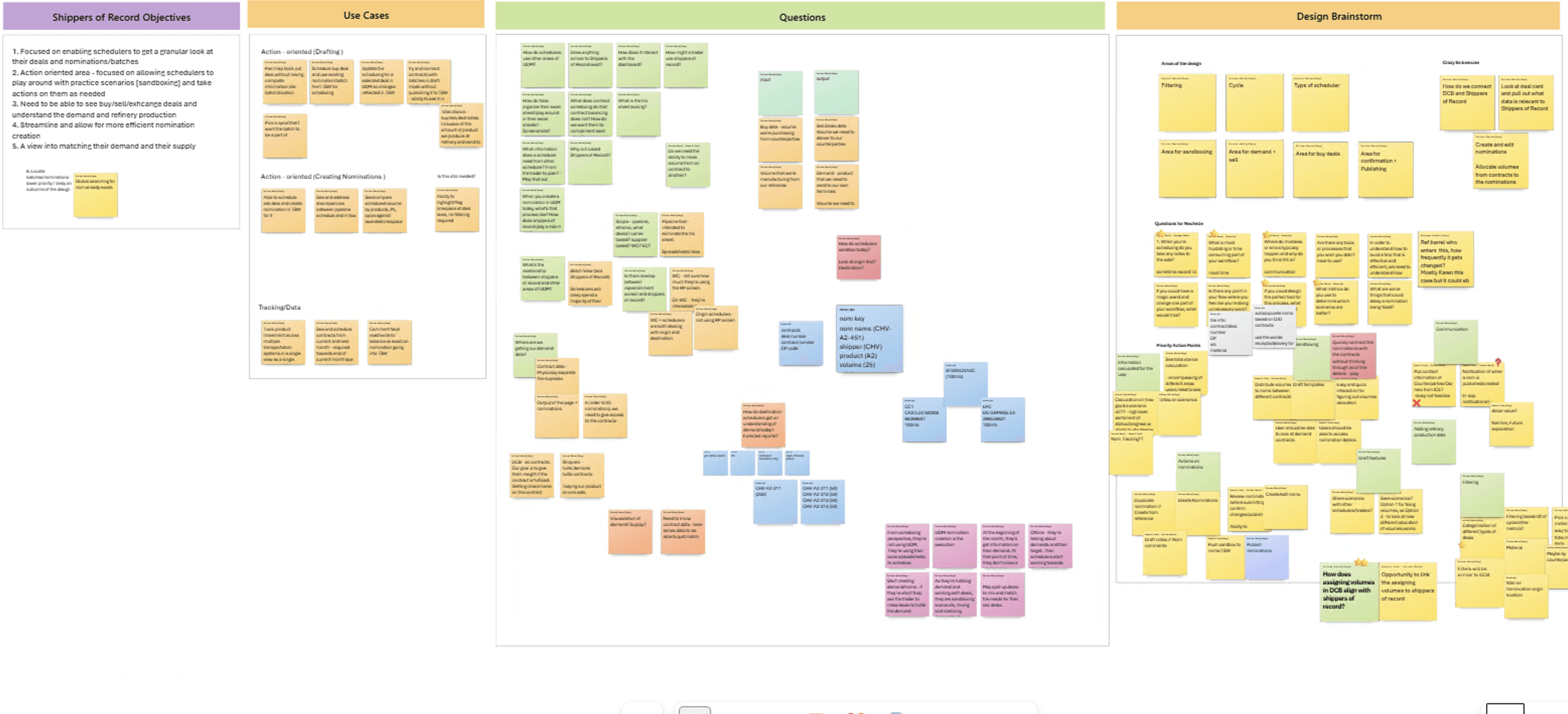
Before talking to schedulers, I ran an internal workshop to get our team aligned on what we knew and what we still needed to figure out. We started with East Coast because it was the simpler process, a deliberate way to build shared understanding before introducing West Coast complexity.
Out of that workshop came a mental model that ended up running through the whole project. Contract scheduling is essentially a card matching game: supply paired to demand, volumes netted to zero, records aligned across every party in the chain. At first, it was difficult to grasp the complexity and language required to understand their work – they used a lot of acronyms, looked at a lot of different data sources, and assessed contracts with expert lenses. But talking through their process from the perspective of a card game gave us a way to talk about something technically dense.
We talked to East and West Coast schedulers while they were doing their work. Hearing them describe the process was useful, but watching them actually work through their Excel sheets showed us things they wouldn't have thought to mention. After establishing the card matching mentality, the next biggest thing we saw was that schedulers were already working in a draft mode, testing volumes on the side, working through scenarios in a copied sheet before touching the live record, then committing once they were confident. Building this drafting functionality into our application would ensure that schedulers can do everything they’re doing in Excel today in our application without having to jump or recreate the data elsewhere.
Three days in the same room
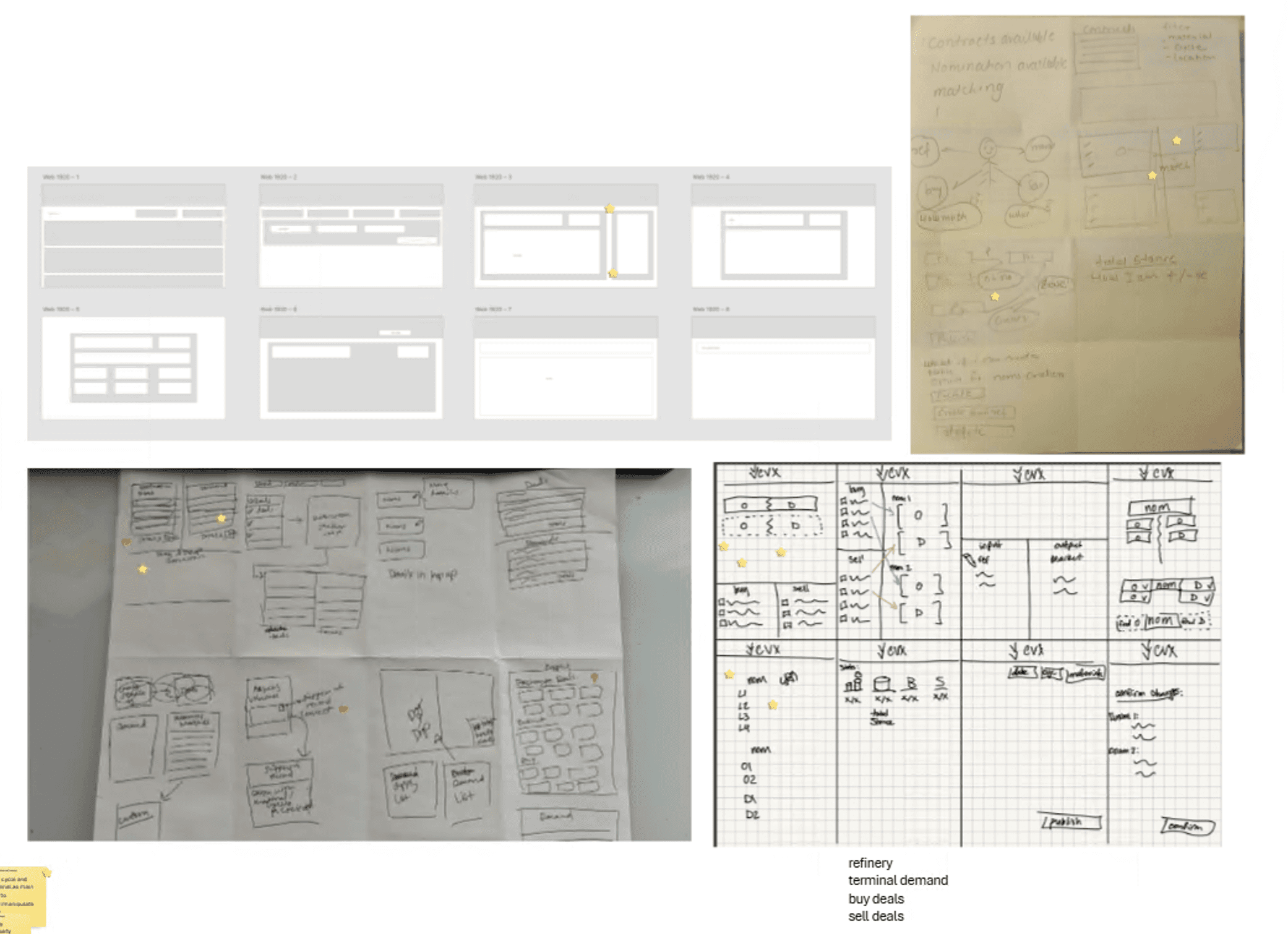
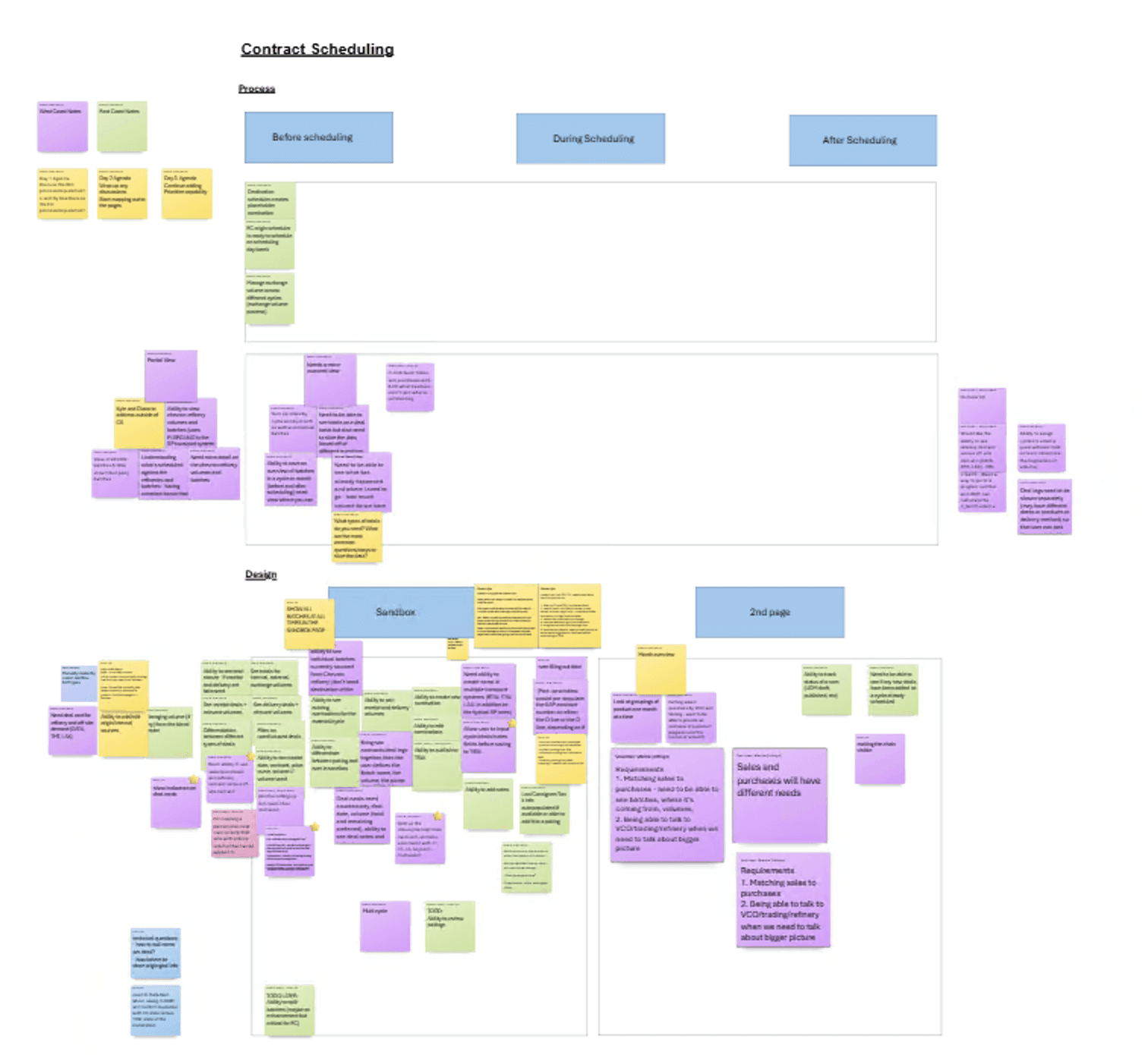
After our initial discovery sessions, I brought East and West Coast schedulers together in San Ramon for three days to get to understand where the two coasts were similar enough to share a solution and where they weren't. The goal of our workshop was to organize the process we had been talking about before, during, and after the scheduling phases and start our early iterations of design to gather feedback from the San Ramon schedulers.
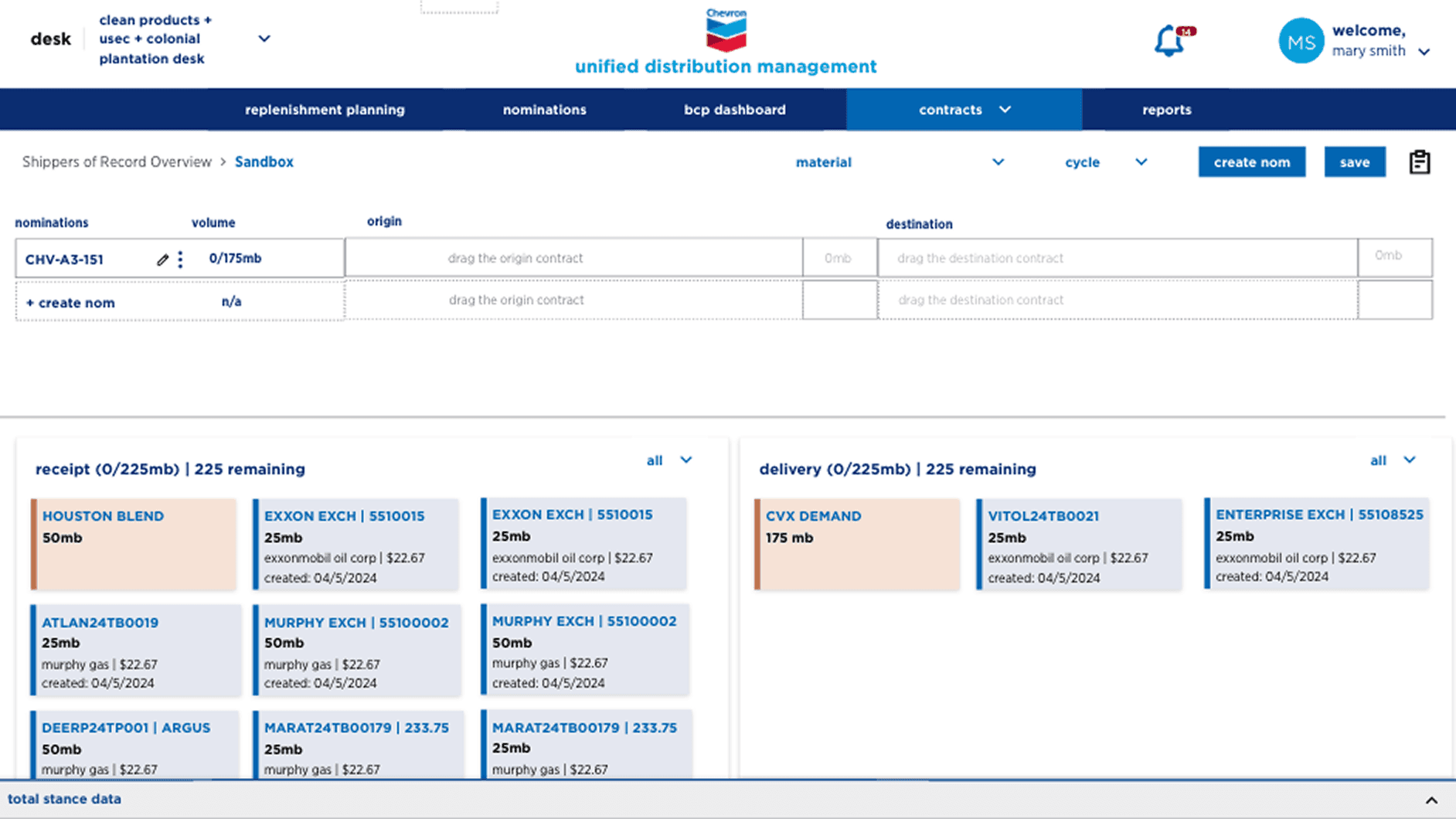
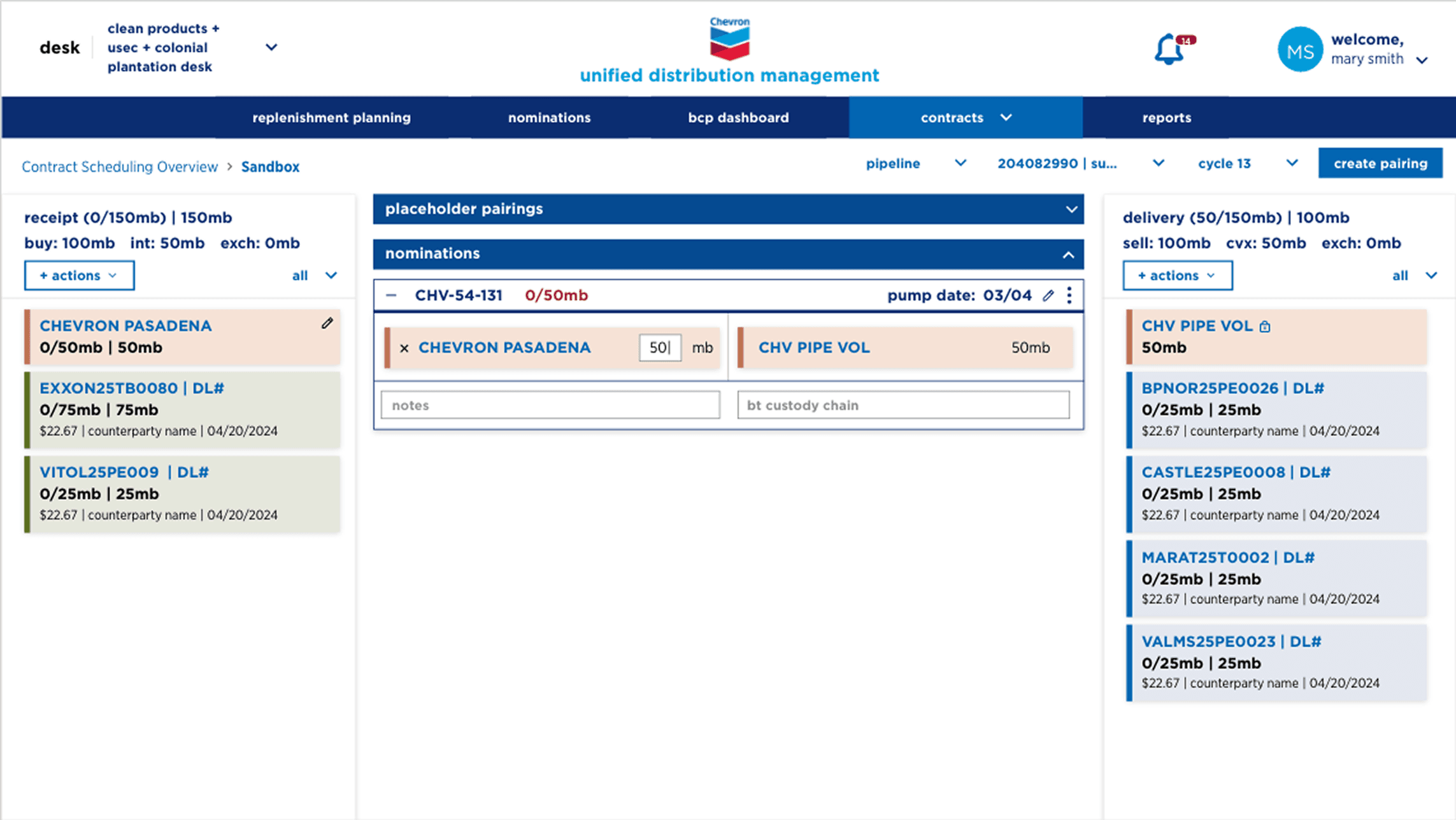
From our remote discovery sessions, we had landed on a sandboxing design concept for single-cycle scheduling, and our product lead wanted to contain the scheduling process on one page to reduce technical complexity.
We ran crazy 8s and lo-fi sketching with schedulers and stakeholders in the same room, which surfaced assumptions on both sides quickly. What became clear was how differently the two regions operated. Our sandbox model worked for the East Coast because they only cared about one cycle at a time in a handoff model between origin and destination schedulers, whereas the West Coast was managing four cycles simultaneously with triple the nomination volume and both origin and destination needs. Every attempt to make a single view serve both groups made it more cluttered.
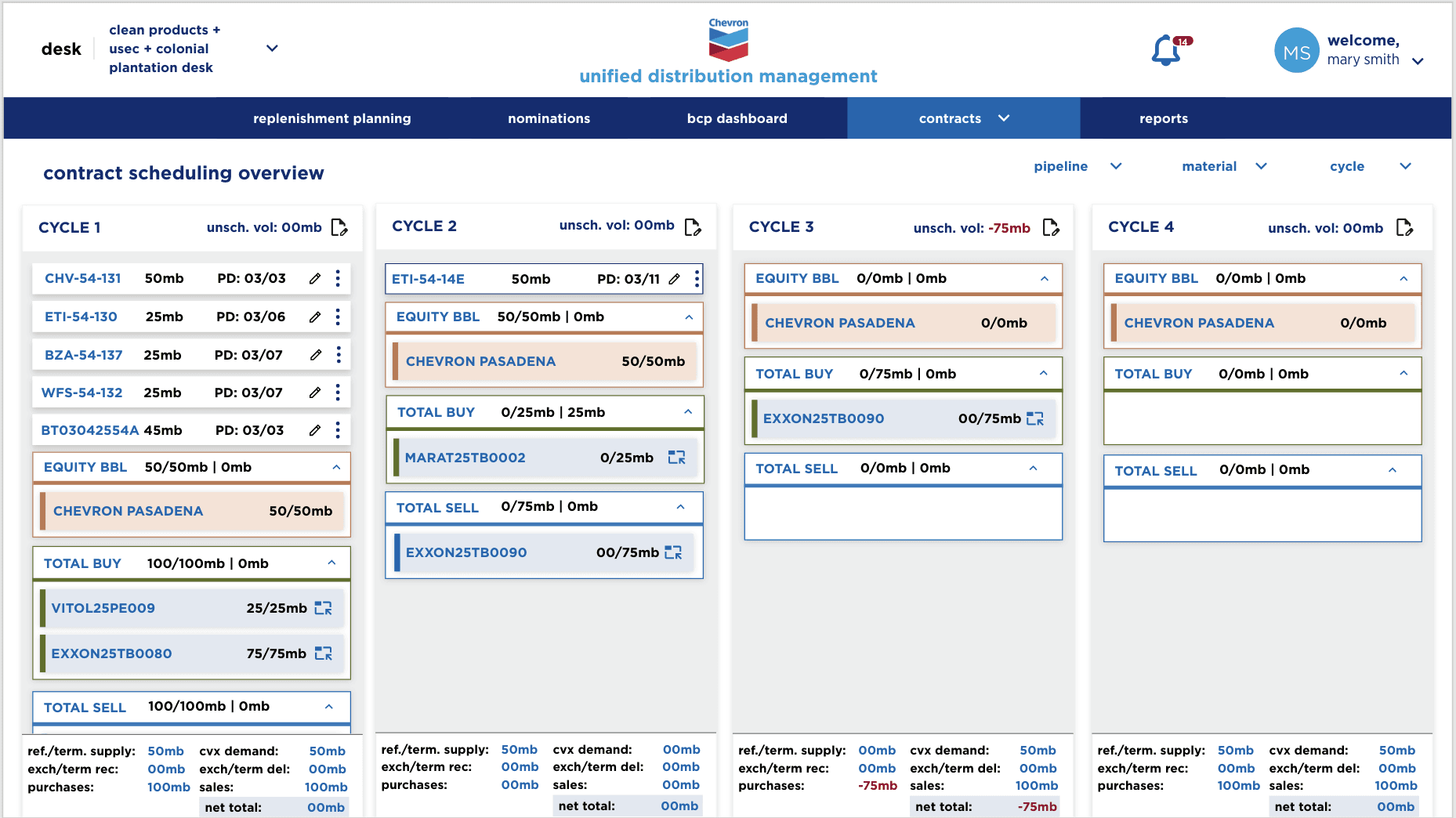
The cleaner solution was two pages: a sandbox built for single-cycle work schedulers would jump in before and during the scheduling phase, and an overview page that aggregated nominations across all four cycles they can utilize in the after-scheduling phase. Schedulers would move between them depending on what they were doing.
As we were coming to these concussions, my team and I were iterating on our sandbox designs, and by the end of the workshop, we shared an early iteration of the sandbox with a wider group of schedulers before going further. Their responses validated our card matching and drafting approach, but left us with a lot more opportunities to improve and iterate on the design.
Getting schedulers out of a table-heavy view
The biggest design challenge was moving schedulers away from how they'd been working for years. Tables felt natural — rows of data, everything visible at once. But a table wasn't going to reflect how they actually worked through scheduling.
We proposed a card-based layout from the start, rooted in the matching metaphor. Our SME schedulers pushed back and wanted a table. We built both and put them side by side against a sample scenario. We went through many table iterations, trying to find one that would allow them the same flexibility of drafting. Seeing the comparison, schedulers could recognize how the cards mapped to their actual drafting process — receipts paired to deliveries, supply matched to demand. They chose cards as we worked through different scenarios and the most intuitive experience became clearer.
An eagle eye into the full month
The overview page — the second page supplementing the sandbox— became the anchor for West Coast schedulers managing four simultaneous cycles. It organized nominations across all their sources and gave them an entry point into any cycle or nomination from a single view — their one-stop shop into any part of the scheduling process.
A lot of the design work was about making the sandbox and overview feel like one connected system rather than two separate pages. Schedulers needed to move between them fluidly depending on where they were in a cycle, so the connective tissue had to be intuitive enough that they never had to think about which page they were on or why.
In production, and built to scale
Over the 8 months, we built the foundations of the East and West Coast contract scheduling process through the sandbox and overview pages. They are both in production and being used by both scheduling teams, with incremental improvements being made.
The design is also built to be the starting point for contract scheduling across other product types and regions as Chevron scales the platform, so what we built for clean products in North America becomes the foundation for everything else that gets built.